
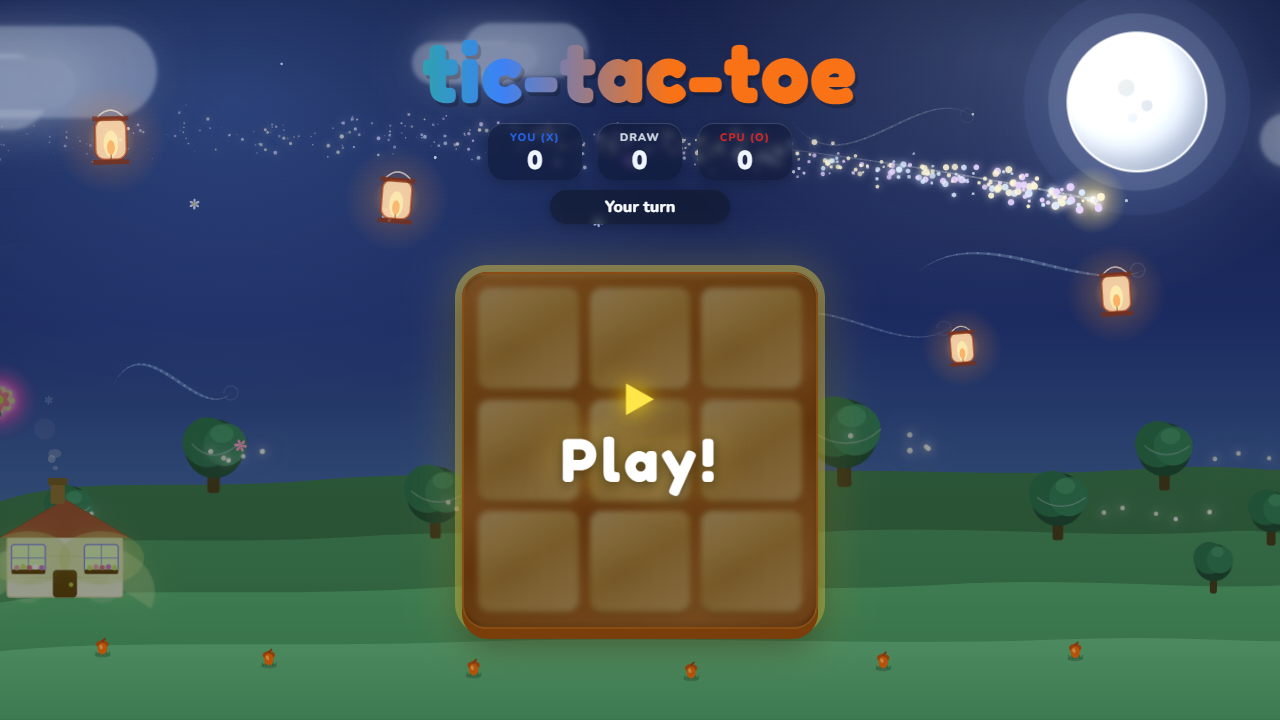
One Day Games is called that because of this game. I had Tic-Tac-Toe in my head in the morning and it was live and playable by the end of the day — designed, built, and shipped in one day. The studio name is just the thing that happened, turned into a promise.
Here's how it actually went — because the "in a day" part is true, and the way it happened says a lot about how this studio works.
I've spent 32 years in AAA games on the production and design side — Treyarch, PlayStation, founding roles at two new studios — and what that taught me is how to take a thing from an idea to a shipped, finished product: scoping it, directing it, knowing what "done" looks like and refusing to ship before it's there. That's the skill set that built this game. I made the calls — design, feel, what's in, what's cut — and I kept making them until the thing on screen matched the thing in my head.
The part that went fast was the part you'd expect to be hard: the game logic, getting a working, playable thing live. That came together quickly.
The part that was actually hard was the part you'd expect to be easy: the art and animation. Getting specific visual results — this exact motion, this timing, this look — took real directing. "Make it feel better" doesn't work. I had to get precise, iterate, reject, redirect, the way you give notes to an artist who can't yet see what's in your head. The bottleneck wasn't the building. It was the directing of taste, which is exactly the job I already know how to do.
The music took its own time to get right, and it was worth it — what came out is a genuinely lovely little track.
The same production instinct didn't stop at "shipped." I built a maintenance operation around the game so it stays online and reports issues back to me without my having to go looking. Most of the time that means I get told what needs attention. In a few genuinely magical cases, the ops layer caught a problem and fixed it itself — detected, repaired, verified, back to green, without me directing the specific fix. I don't oversell that part; it's scoped to bugs and upkeep, and every creative and feature decision is still mine. But it's the thing I'm proudest of as a producer: I built a game that, in the small ways, takes care of itself.
The takeaway, and the reason this matters beyond one small game: 32 years of AAA production and design experience got a game designed, built, produced, and shipped to live in a single day. The job I've always done — directing finished work into existence — just moves faster now.
Play Tic-Tac-Toe